Onycholysis is the painless separation of a nail from the skin beneath it. It is most often a cosmetic worry, but it can occasionally signal an underlying health issue that deserves a closer look.
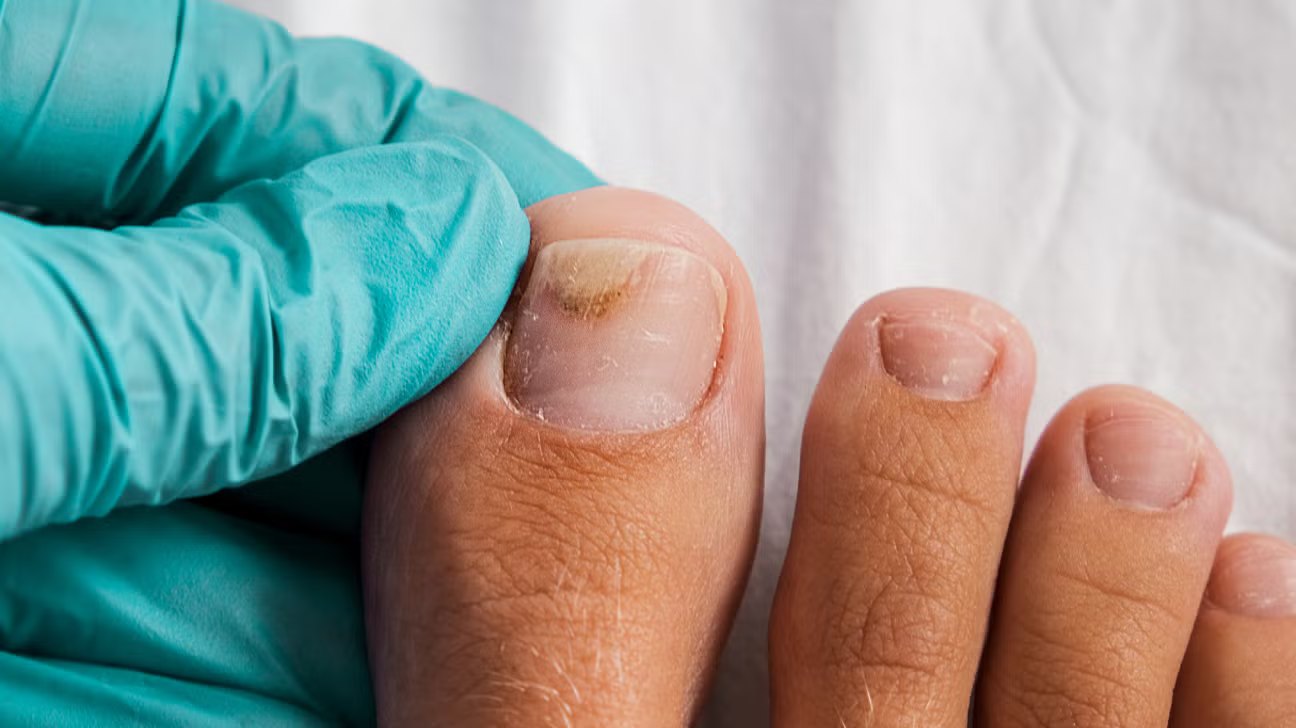
It is a common condition in which a fingernail or toenail gradually lifts away from the nail bed, the skin the nail sits on. The separation usually begins at the distal end, meaning the tip of the toe, or along the sides of the nail, and works its way back over time.
What Is Onycholysis?
Onycholysis is the lifting of the nail plate away from the nail bed underneath it. The lifted portion often looks white, yellow or opaque, because there is now air rather than skin beneath it. It is painless, but the loose edge can catch and tear, which is where the real trouble begins.
What Causes Onycholysis?
There are only a handful of causes, and by far the most common is trauma, whether a single knock or, more often, repeated minor trauma. Running is a classic example: with every stride the nail is pushed against the front of the shoe, and over time that intermittent trauma gradually prises the nail away from its bed.
A fungal nail infection can also cause it, most commonly in the big toe, and often where there has already been a direct injury such as dropping something heavy on the toe. Less commonly, onycholysis can be linked to tumours, or it can appear as a side effect of certain medications, including chemotherapy and drugs such as tetracycline, minocycline (broad-spectrum antibiotics) and naproxen (a non-steroidal anti-inflammatory).
Common Causes of Onycholysis
Why the Nail Bed Matters
To understand onycholysis it helps to understand what lies beneath the nail. The nail bed is the delicate layer of skin the nail plate rests on, and it is rich in nerves and blood vessels that nourish the whole nail. The nail itself grows from the matrix, the area tucked under the base of the nail near the cuticle.
When the bed is damaged, the nail growing over it tends to follow that damaged line. This is exactly what we see with ingrown toenails, which is why the definitive treatment there, a Partial Nail Avulsion, uses a chemical called phenol to permanently remove only the offending sliver of nail while leaving the rest looking natural.
How We Treat Onycholysis
The treatment is much as you would imagine. We carefully cut away the part of the nail that has separated, without harming the healthy, still-attached nail or the tissue underneath it.
At Grays Foot Clinic, using a skilled scalpel technique, we can also level and even out the nail so the attached part sits congruously with the area that had lifted. Done well, the treated nail looks even and tidy again rather than ragged.
Never Pull at a Lifting Nail
The loose, lifted part of the nail, particularly on the big toe, can catch on socks and shoes and tear off. That tearing traumatises the nail bed underneath and sets the whole problem back. If a nail is lifting, have it tidied up properly rather than picking or pulling at it.
Aftercare and the Cosmetic Side
Good aftercare is mostly about hydration. We advise keeping the affected nails well moisturised and following the treatment plan we set out, which protects the long-term shape of the nail and keeps it looking healthy as it grows.
Appearance matters too, and we take it seriously. Onycholysis is a genuine worry for many of our patients, particularly those who like to wear open footwear, because a lifted big-toe nail can look unsightly. Our podiatrists and chiropodists work to make the nail as tidy and natural-looking as possible.
Keep Those Nails Hydrated
Once a nail has been treated, a daily application of a good, fragrance-free nail and cuticle cream helps keep the nail flexible and the surrounding skin healthy as it grows back down onto the bed. It is simple, but it makes a real difference to the final result.
There Are No Quick Fixes
Onycholysis is far easier to avoid than to cure, and there are no shortcuts. Gimmicks such as nail braces have no role here, despite the occasional patient who ignores advice and chases treatments that simply do not work.
See a qualified chiropodist or an HCPC-registered podiatrist to have onycholysis treated properly, and you may be pleasantly surprised at how close to new your nails can look after a visit. Do come in for a foot health MOT, because you only have one pair of feet, and staying mobile matters more and more as we age.
Our Service
Podiatry & Chiropody
A lifting or separating toenail should be assessed and tidied properly, not picked at. Our HCPC-registered podiatrists treat onycholysis, restore the nail's appearance and check for any underlying cause, all in a single appointment. From £100.
GRAYS FOOT CLINIC
Ready for Expert Care?
HCPC-registered podiatrists in Holborn, London. Est. 1986.