The simple answer to the question above is yes.
This is a very serious problem that concerns me daily. As I walk to and from work each day, my podiatric eye naturally seeks out people with what I call dodgy gaits, or irregular walking patterns.
Inappropriate footwear accounts for 50 percent of the gait problems I see in my surgery. Inappropriate shoes are the leading cause of painful conditions affecting the feet, knees, hips and even the jaw.
In fact, in my clinical experience, more than 60% of my patients present with biomechanical issues, many of whom have been living with unnecessary pain for years without knowing the root cause.
The Most Common Condition: Plantar Fasciitis
The most common condition or anomaly of the feet that I see at my clinic is plantar fasciitis.
Plantar fasciitis is a very painful and often long-standing foot condition. It is caused by the inner arch of the foot collapsing and rolling inward, which is known as excessive pronation.
The underlying cause of plantar fasciitis is often hypermobility of the big joint at the bottom of the leg near the ankle. This joint is known as the subtalar joint. It articulates with two of the tarsal bones, the talus and the calcaneus.
The movement that this joint makes is known as pronation (rolling in) and supination (rolling out).
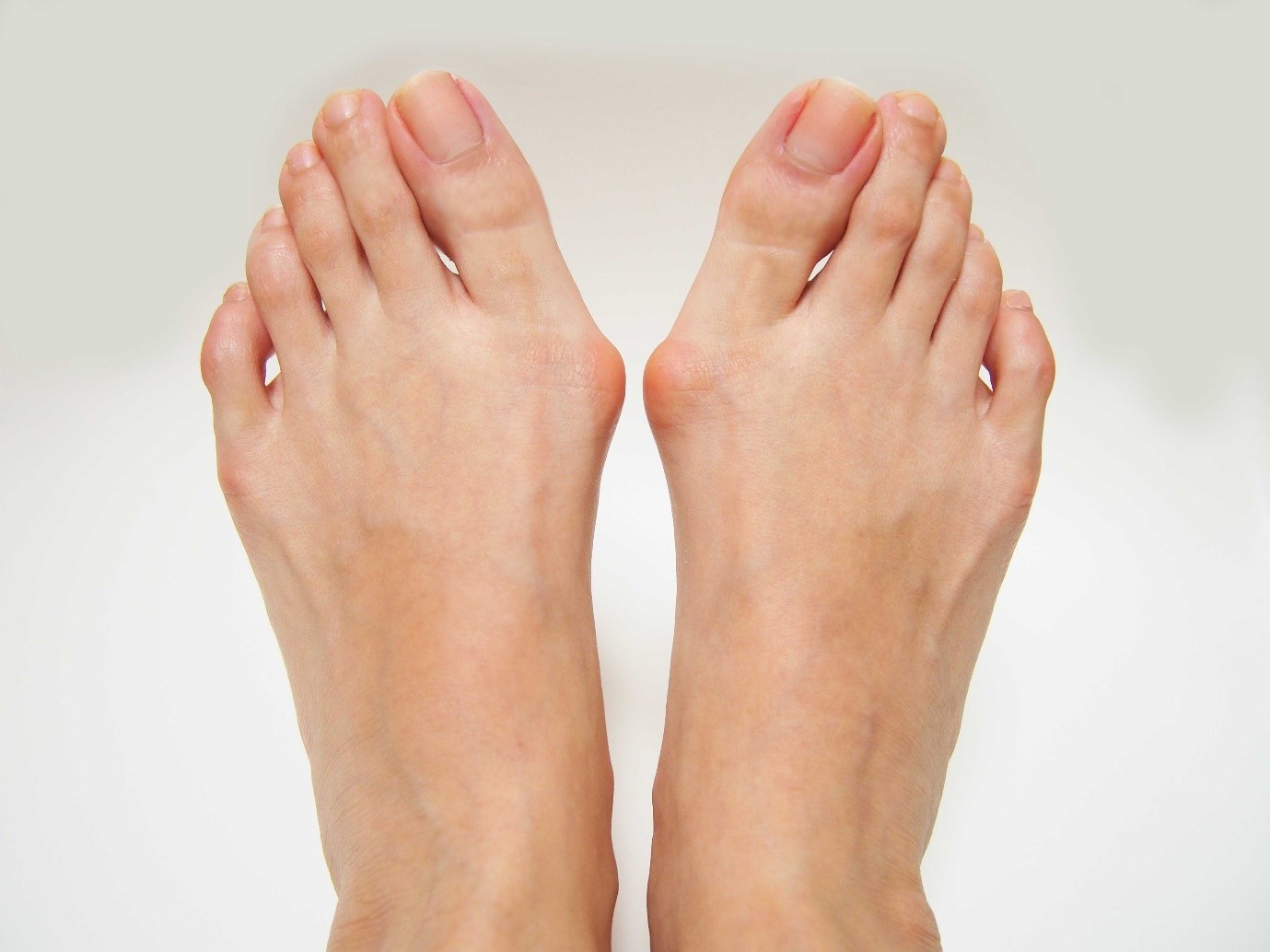
Take a look at your feet. Do they look flat? Are they rolling inwards? If so, then you are excessively pronating at the subtalar joint, and this can lead to plantar fasciitis. This occurs because the ligaments and tendons under the arch are being pulled and stretched as the foot rolls in with each step you take.
Are Your Feet Rolling Inwards?
Stand up and look down at your feet. If the inner arch is touching or nearly touching the floor, you are likely overpronating. This puts excessive strain on the ligaments and tendons under the arch with every single step you take.
How Plantar Fasciitis Develops
There are a few common reasons why people develop plantar fasciitis. Long hours of standing, being overweight, the ageing foot, shoes that are too tight or which lack support and cushioning, exercising on hard floors, an injury or weakness, or simply flat feet are all major causes.
Even the word fasciitis (inflammation of the fascia of a muscle or organ) has two consecutive letter i's, a very rare occurrence in the English language. When last I checked, the only ones I could find were:
- Zombiism (the condition of being a zombie)
- Filariid (parasitic round worm)
- Shiitake (type of edible fungus)
- Reduviid (assassin bug)
Well, now you can see that the double i words above are all interestingly fiendish, and they marry well with plantar fasciitis!
When I first examine a new patient, I observe them standing from top to toe. Flat (planus) feet are very easy to diagnose because the whole inside area of the foot is leaning inwards.
Now, imagine all the weight of the body, combined with the action of putting one leg in front of the other, coming down on the foot and then collapsing as the foot hits the ground. Multiply that by 5,000 to 10,000 steps a day, and it is easy to see how this insidious condition can develop over weeks, months and even years of daily walking.
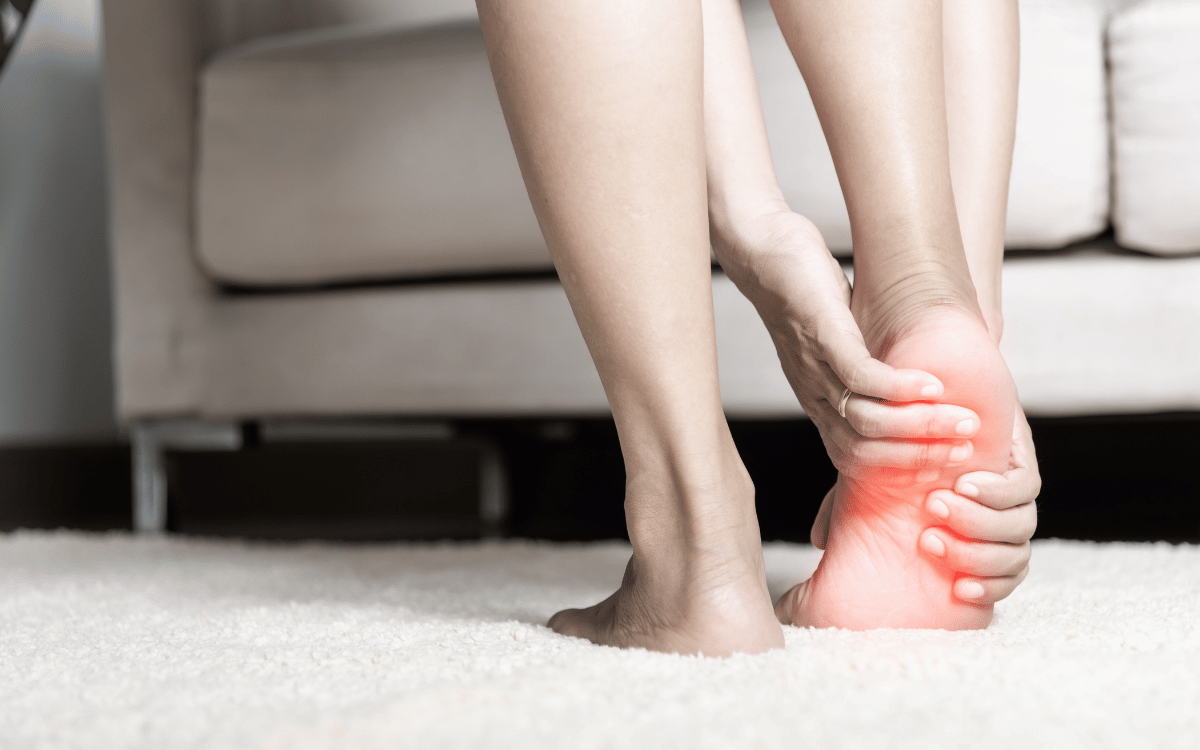
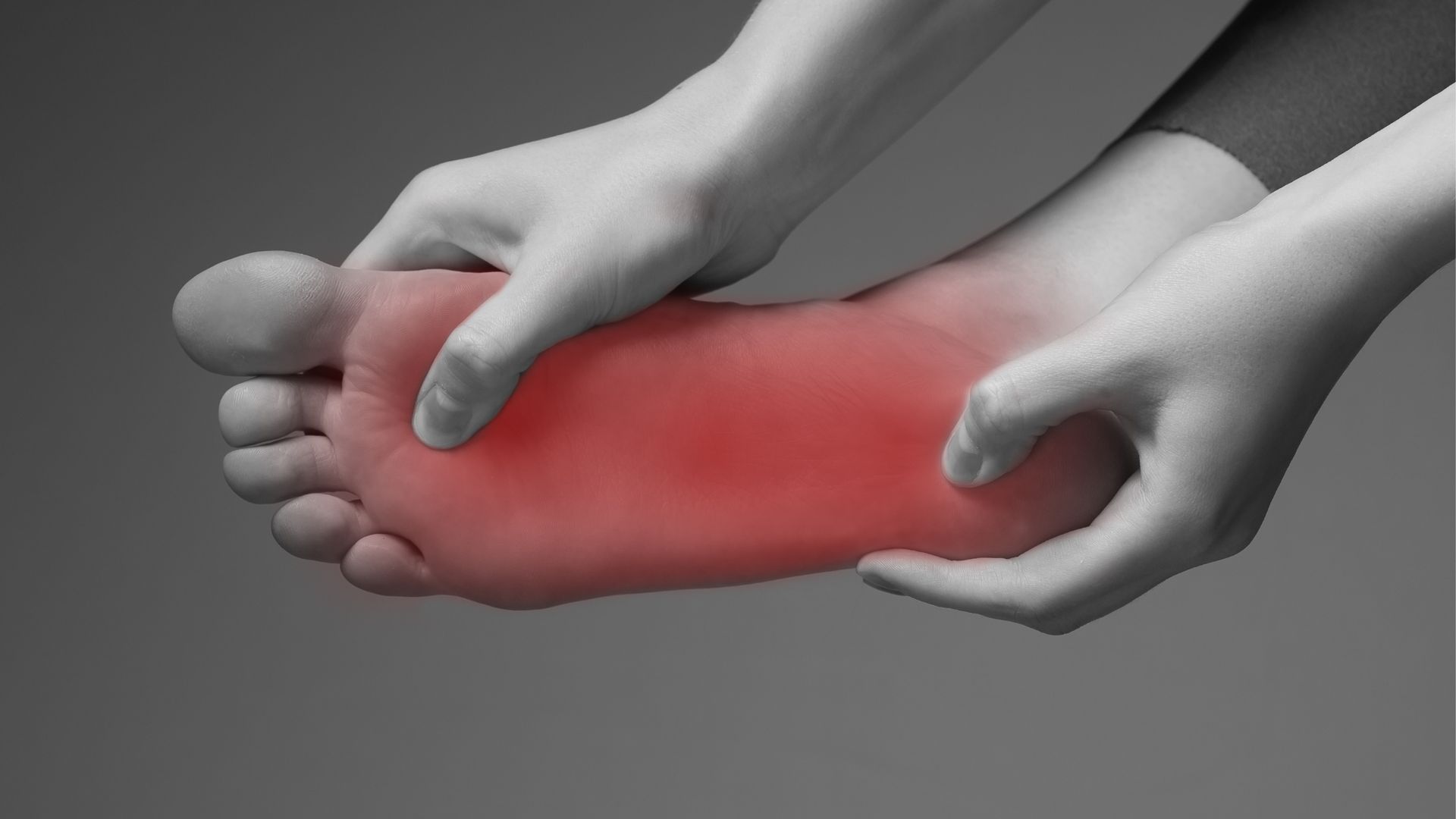
The pain usually starts in the arch area of the foot, just where the heel begins. The pain may be very sharp and may then become persistent. If not treated quickly, the whole foot may become inflamed, red and painful to walk on. The pain is generally worse in the morning because, during the night when the foot is resting, the inflammation subsides. But when the foot is first placed on the ground, the delicate healing tissues are stretched as the foot pronates excessively at the subtalar joint. This makes the plantar fasciitis worse over time.
The Chain Reaction Through the Body
In essence, 26 bones, 30 joints and more than 100 muscles are all working together to maintain balance, support and mobility.
Now imagine that some of these elements are made weak through structural imbalances (rolling feet). Then conditions like plantar fasciitis will develop. This can then have a knock-on effect up the leg, through the knee, hip, lower back and all the way up to the jaw.
A leg length discrepancy must also be considered when assessing new patients. This is something that is often overlooked or missed, but it can have devastating effects on the body if not treated. Having one leg longer than the other leads to imbalances throughout the whole body, ultimately causing abnormal wear on the joints of the ankles, knees, hips, spine and jaw.
Parts of the Body Affected by Flat Feet
The Solution: Custom-Made Orthotics
In simple terms, the answer to plantar fasciitis is to be prescribed custom-made (bespoke) orthotics.
"Why would I not just benefit from a regular insole?" you may ask. Well, a shop-bought insole is better than no insole at all, because at least it will support the arches and take some of the strain caused by excessive pronation. However, within a very short time of wearing it, the foot will make the insole flatten because the material is made of soft rubber at best.
At Grays Foot Clinic we offer a custom-built orthotic service. We take plaster cast impressions of the feet where the subtalar joint is held in a neutral position, which is the ideal position that the foot should be held in by an orthotic.
Orthotics will distribute the weight of the body over the feet evenly, without any abnormal forces causing abnormal movement. This prevents conditions like plantar fasciitis and pain throughout the body. For patients with a leg length discrepancy, a heel raise is incorporated into the correct orthotic to bring the short leg level with the other.
We Recommend Three Pairs
At Grays Foot Clinic, we encourage our patients to invest in three pairs of orthotics to cover all their daily footwear needs:
- Carbon fibre orthotic (for shoes and boots): for maximum control and correction
- Polyurethane orthotic (for trainers): for flexibility during sport and activity
- EVA orthotic (for indoor slippers or Crocs): for cushioning and comfort at home
Wear Orthotics With All Footwear
Orthotics must be worn with all footwear, not just your everyday shoes. Going barefoot or wearing unsupported footwear for extended periods undermines the correction and slows your recovery. Three pairs covering shoes, trainers and indoor footwear gives your body the consistent support it needs throughout the entire day.
Many of our patients tell us that their orthotics changed their life, and this is something we hear regularly at the clinic. When the body is properly supported from the ground up, the difference in comfort, mobility and energy levels can be remarkable.
A single pair of orthotics starts from £595. However, we also offer a three-pair package for £895, covering shoes and boots, trainers, and indoor footwear, which represents significantly better value and ensures your feet are fully supported throughout the day. The process takes an hour, and the fitting includes a session of foot mobilisation to ensure that the feet are in alignment to accommodate the devices prescribed.
Patients Say It Changed Their Life
"Orthotics changed my life." We hear this from patients regularly, and it makes every consultation worthwhile. When your feet are properly supported, the benefits ripple upward through your knees, hips, back and beyond. Book a consultation today to find out whether custom orthotics are right for you.
Our Service
Custom-Made Orthotics
Suffering from flat feet, plantar fasciitis or pain that travels up the leg? Custom-made orthotics correct the root cause — not just the symptom. From £595, including biomechanical assessment, plaster casting and a follow-up appointment.
GRAYS FOOT CLINIC
Ready for Expert Care?
HCPC-registered podiatrists in Holborn, London. Est. 1986.