Most new patients arrive at our clinic feeling a little anxious about their first appointment, after paying £100 for a consultation and hoping their foot condition will begin to improve. The appointment takes approximately 30 minutes and begins with a consultation form covering the patient's relevant medical history.
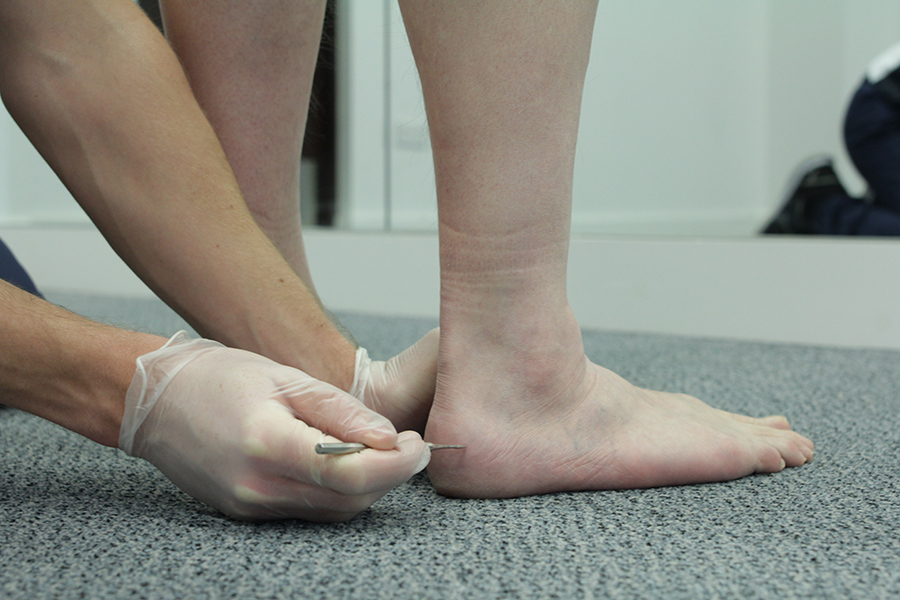
Once shoes and socks are removed, the podiatrist observes the patient standing to assess their gait and posture. This is not a formality. It is one of the most important parts of the clinical assessment.
Leg Length Discrepancy
Many people have a Leg Length Discrepancy (LLD), which in simple terms means one leg is longer than the other. Many people experience what is called Asymptomatic Leg Length Discrepancy (ALLD), where the body adapts to this difference without causing noticeable symptoms.
However, when problems do develop, it becomes Symptomatic Leg Length Discrepancy (SLLD). Due to the resulting skeletal imbalance, joints grind against each other in abnormal ways. This chronic abnormality will ultimately cause wearing down of the cartilage that stabilises the joint surface on certain areas of the body. Left untreated, this leads to deformity, mobility difficulties, and reduced activity in later life.
SLLD can cause issues with the feet, knees, hips, and even jaw clenching (Bruxism), making it a whole-body problem that originates in the feet.
Did You Know?
Most people have some degree of leg length discrepancy. Asymptomatic cases are common, but when symptoms emerge, addressing them early can prevent years of cumulative joint damage that becomes far more complex to treat.
The Biomechanical Assessment
The podiatrist diagnoses the problem through a full biomechanical assessment involving detailed leg measurements. Both feet are then cast in "Neutral Position" using sheets of Plaster of Paris bandage soaked in warm water, carefully wrapped around each foot individually.
Once removed and set, these plaster moulds are sent to a specialist orthotic laboratory. A custom-made insole, known as an orthotic, is hand-crafted to the precise shape of each foot. For patients with a leg length discrepancy, a heel raise is incorporated on the shorter leg side to rebalance the body and ease joint pain throughout the kinetic chain.
What to Expect at Your Appointment
The plaster casting process takes approximately 15 minutes and is completely painless. Your custom orthotics are typically ready within 2 to 3 weeks from our specialist laboratory. A fitting appointment is included at no extra charge.
What Are Orthotics Made From?
Orthotics are made from a material known as carbon fibre, which is both flexible and long-lasting, aimed at correcting posture over the long term. Regular wear distributes body weight evenly across the foot, easing pressure on overloaded areas.
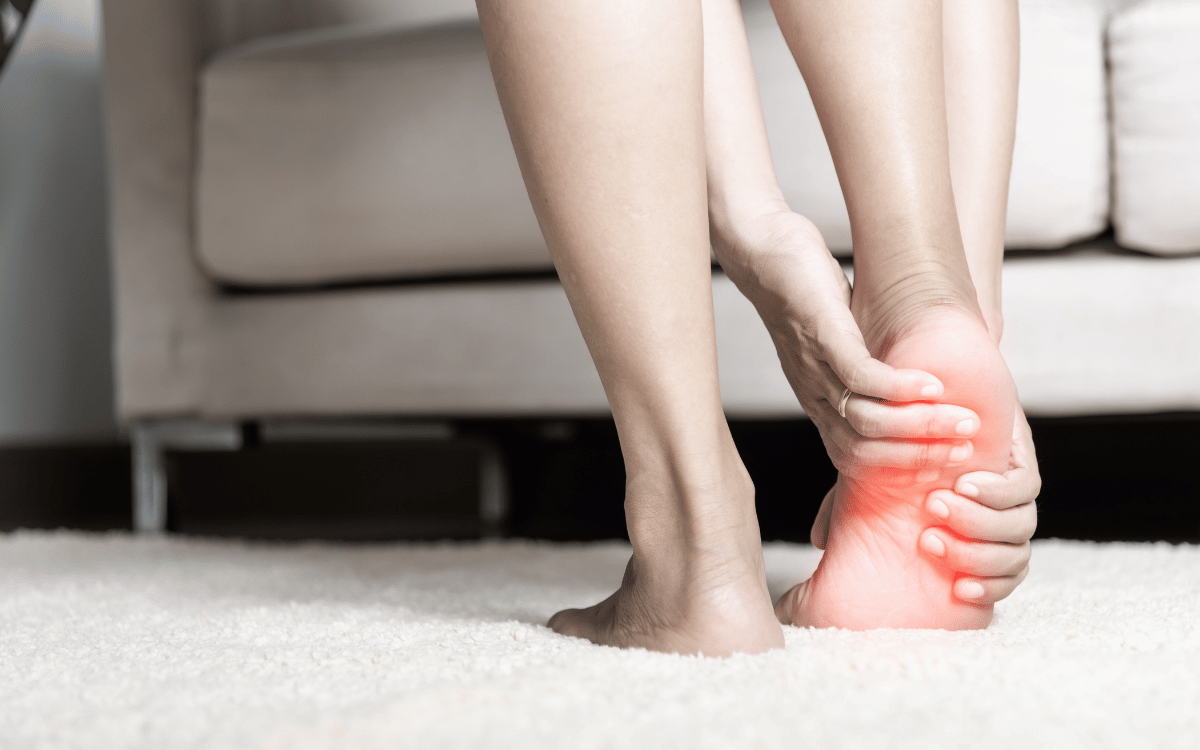
Patients receive clear instructions on how to gradually build up their use of orthotics, as they re-educate the body from the ground up. Many patients experience immediate pain relief, particularly those presenting with plantar fasciitis, where silicone heel cups are often incorporated into the orthotic design.
Conditions Orthotics Can Improve
Why Orthotics Are Worth the Investment
While custom orthotics represent a greater upfront investment compared to off-the-shelf insoles, they address the root cause of your condition rather than merely masking symptoms. Physiotherapy or massage alone often provide only temporary relief.
Our clinic offers an initial consultation that includes a Mini-Biomechanical Assessment to determine whether custom orthotics are appropriate for your specific condition. There is no one-size-fits-all approach at Grays Foot Clinic.
Our Service
Custom-Made Orthotics
If you are experiencing foot, knee, hip or back pain, a biomechanical assessment and custom orthotics could be the solution. Plaster-of-Paris casting, hand-crafted devices, and a follow-up fitting — all included from £595.
GRAYS FOOT CLINIC
Ready for Expert Care?
HCPC-registered podiatrists in Holborn, London. Est. 1986.