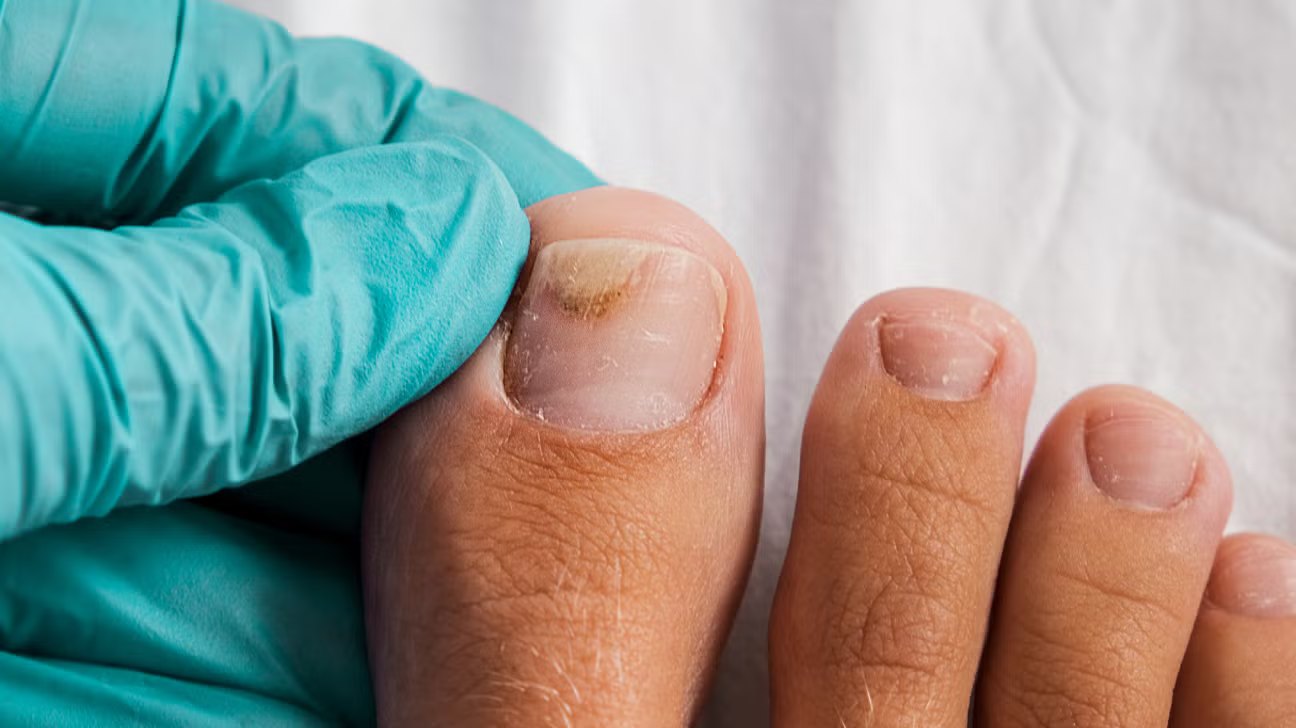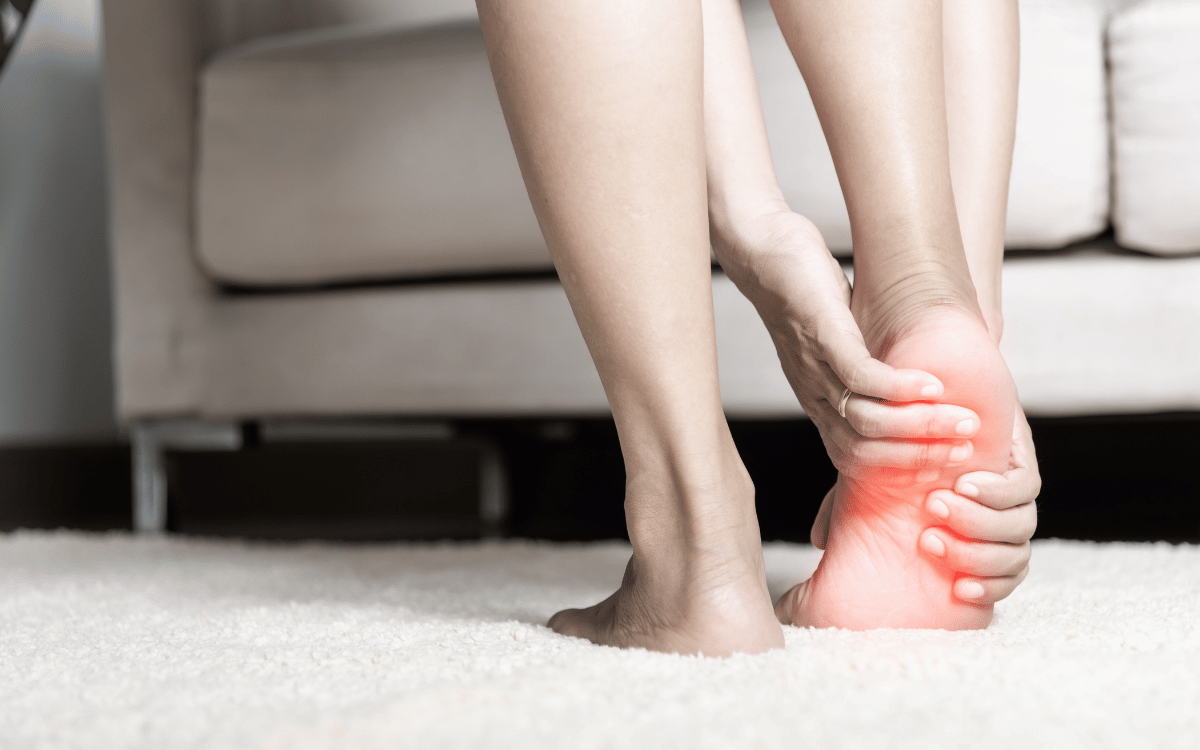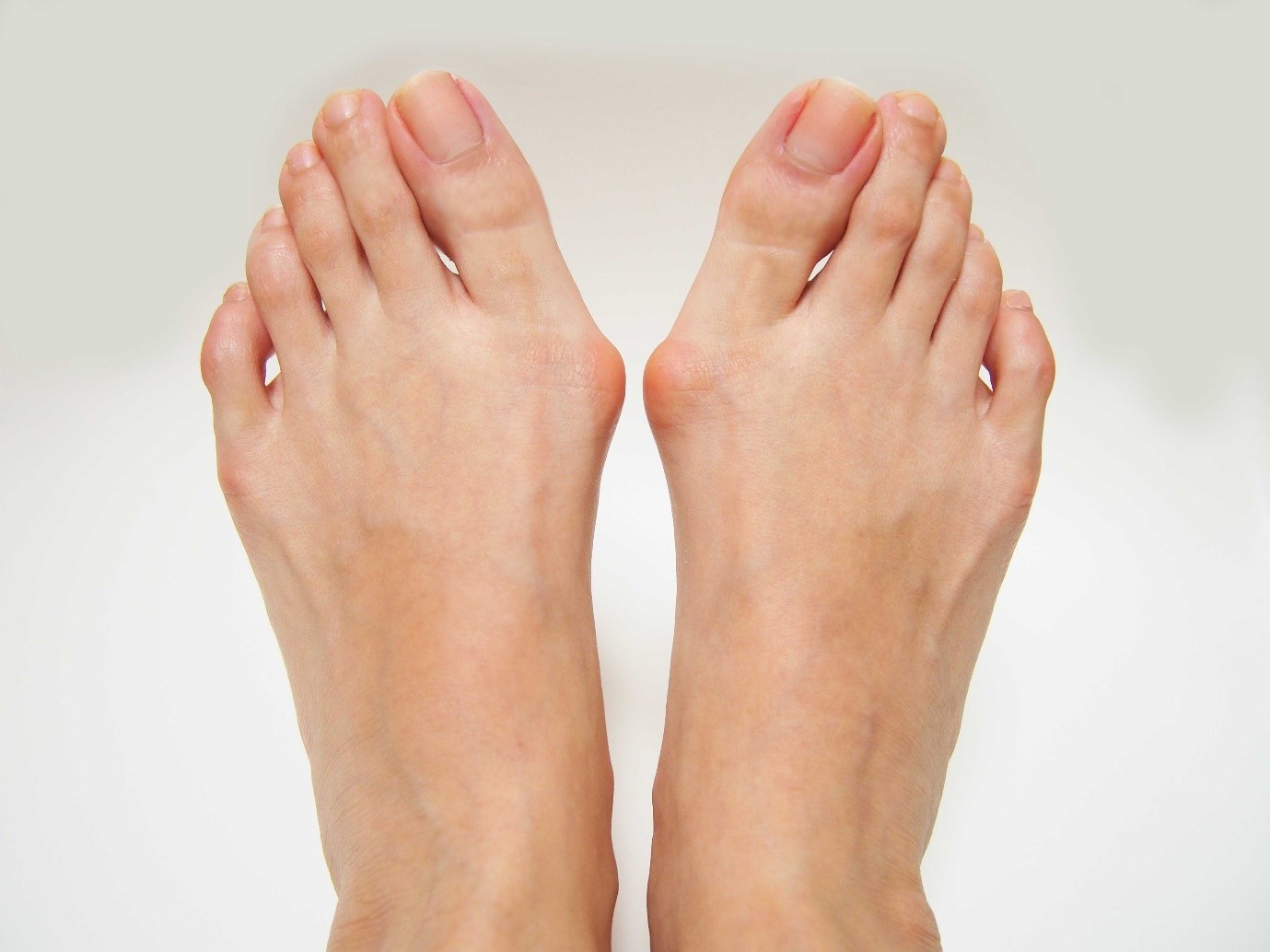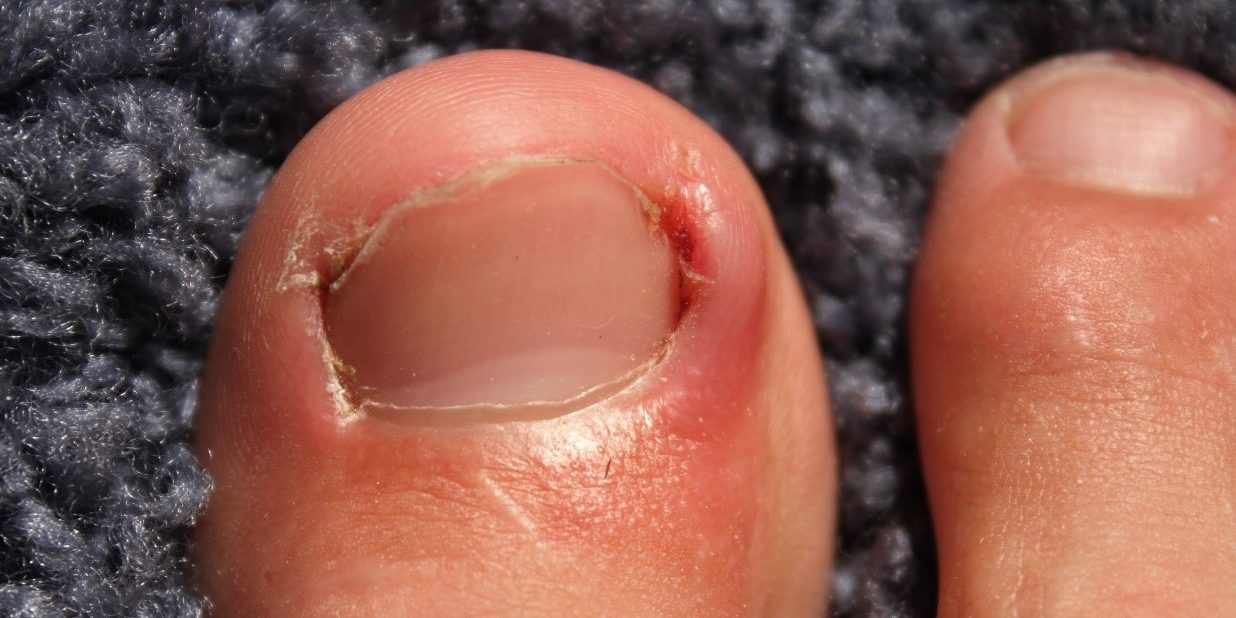
The medical term for an ingrown toenail is onychocryptosis. It is one of the most common and painful conditions we treat at Grays Foot Clinic, and it affects people of all ages. The big toenail is the most frequently affected, though any toenail can become ingrown.
Contrary to popular belief, simply cutting your nails incorrectly is not the most common cause. In many cases, an ingrown toenail is the result of several contributing factors working together, and understanding them is the first step toward permanent relief.
What Is Onychocryptosis?
Onychocryptosis is the medical term for an ingrown toenail: a condition where the edge of the nail grows into or is pressed into the surrounding soft tissue. This causes pain, inflammation, redness, and in more advanced cases, infection with discharge.
The Eight Most Common Causes
In over 40 years of clinical practice, the following eight causes account for the vast majority of ingrown toenail cases I see at the clinic:
Eight Common Causes at a Glance
1. Tight or Narrow Footwear
This is perhaps the most common contributing factor. Shoes that are too tight, too narrow, or have a pointed toe compress the toes laterally, forcing the nail edge into the surrounding tissue with every step.
High heels compound the problem further by pushing the foot forward into the toe box, increasing pressure on the nails. It is not a coincidence that ingrown toenails are significantly more common in women than in men.
Choose Footwear Wisely
Always buy shoes with adequate width across the toe box. There should be at least a thumb's width between your longest toe and the end of the shoe. Avoid pointed or narrow-toed styles if you are prone to ingrown toenails.
2. Incorrect Nail Cutting
While not the primary cause in most cases, cutting the nails too short or rounding the corners can encourage the nail edge to grow into the soft tissue at the side of the nail bed.
The correct technique is to cut the nail straight across, leaving a small amount of white nail at the free edge, with only a very slight, gentle curve at the corners. Never dig into the corners or cut down the sides of the nail in an attempt to prevent ingrowing, as this often makes the problem significantly worse.
3. Hereditary Nail Shape
Some people are simply born with nails that are too wide, too curved, or too fan-shaped for their nail bed. This is a hereditary trait and is one of the most frequently overlooked causes of recurring ingrown toenails.
If you have been cutting your nails correctly and wearing appropriate footwear yet still keep getting ingrown toenails, the shape and width of your nail may simply be incompatible with its nail bed. In these cases, a permanent surgical solution is the most effective treatment.
Is Your Nail Simply Too Wide?
Many patients with recurring ingrown toenails have a nail that is structurally too wide for its surrounding tissue. No amount of careful cutting will resolve this permanently. The Partial Nail Avulsion (PNA) procedure permanently narrows the nail by removing the offending edge and treating the nail bed with phenol to prevent regrowth.
4. Overpronation
Overpronation, where the foot rolls excessively inward with each step, is a frequently overlooked cause of ingrown toenails. As the arch flattens and the foot rolls in, the great toe receives excessive medial pressure, pushing the nail edge into the surrounding tissue thousands of times a day.
If you notice that your feet roll inward when you walk, or if your shoes wear down on the inner edge, overpronation may be contributing to your ingrown toenails. Custom-made orthotics can correct the underlying gait problem and reduce the pressure on the great toe with every step.
5. Trauma or Injury
A single, direct injury to the toenail, such as stubbing your toe, dropping something heavy on your foot, or repetitive micro-trauma from running, can disrupt the direction of nail growth. Even a nail that appears to recover from injury can subsequently grow in an abnormal direction, predisposing it to ingrowing.
Repeated trauma, as seen in runners, footballers, and those who stand for long periods in tight footwear, is a particularly common cause among our active patients.
6. Excessive Sweating (Hyperhidrosis)
Excessive sweating of the feet softens the skin around the nail bed, making it more vulnerable to penetration by the nail edge. Soft, macerated skin offers far less resistance and is more easily pierced, which is why warm summer months and certain occupations often correlate with an increase in ingrown toenail presentations.
Keeping feet clean and dry, wearing moisture-wicking socks, and allowing feet to breathe are all helpful in reducing this risk factor.
7. Sporting Activity
Running, football, tennis, and other sports that involve repetitive forward pressure on the feet place significant stress on the toenails. The nail is repeatedly forced against the front of the shoe, compressing the soft tissue around it.
Athletes who notice blackening under the nail (known as a subungual haematoma) after intense activity have experienced direct trauma to the nail bed. Over time, this trauma alters nail growth and increases the likelihood of ingrowing.
Athlete's Warning
Black nails and repeated toe trauma in athletes are not simply cosmetic concerns. Recurrent trauma to the nail bed alters growth patterns and frequently leads to chronic ingrown toenails. Early professional assessment prevents a minor issue from becoming a long-term problem.
8. Nail Biting or Picking (Onychotillomania)
Onychotillomania is a compulsive, body-focused repetitive behaviour characterised by the intense, habitual picking or pulling of fingernails or toenails, often causing significant self-injury, permanent nail damage, or infection. It is far more common than most patients acknowledge, and the resulting jagged, uneven nail edge is a well-recognised trigger for ingrowing.
This is a pattern we see particularly in two groups: ballet dancers and teenagers. Ballet dancers frequently pick or tear at their toenails in response to pressure and pain from pointe work and tight footwear, often as a short-term relief measure that creates a much bigger long-term problem. Teenagers tend to pick or bite as a nervous habit, often without realising the structural damage being done to the nail edge and surrounding tissue.
In both groups, addressing the underlying habit alongside professional treatment is essential for preventing recurrence.
When Home Treatment Is Not Enough
Mild ingrown toenails without infection can sometimes be managed at home with careful nail cutting, warm salt-water soaks, and protective padding. However, if you notice any of the following, it is time to see an HCPC-registered podiatrist promptly:
- Redness, swelling, or warmth around the nail edge
- Discharge or pus from the side of the nail
- Pain that is constant rather than only on direct pressure
- Recurrence: the nail keeps growing back ingrown despite careful home care
- Any symptoms if you have diabetes, peripheral vascular disease, or reduced sensation in the feet
Do Not Delay if Infection Is Present
An infected ingrown toenail can progress to a deeper soft-tissue infection if left untreated. For patients with diabetes or circulatory problems, even a mild infection carries serious risks. Seek professional podiatric care promptly. Do not attempt to cut out the nail yourself.
The Definitive Treatment: Partial Nail Avulsion (PNA)
The gold-standard treatment for recurrent or infected ingrown toenails is ingrown toenail surgery — the Partial Nail Avulsion (PNA). This is a minor surgical procedure performed in the clinic under local anaesthetic, and it permanently resolves the problem in the vast majority of cases.
The procedure involves removing a narrow strip of nail from the affected edge, then applying a chemical called phenol to the exposed nail matrix. Phenol destroys the nail-growing cells in that narrow section, permanently preventing regrowth of the offending edge.
Most patients experience minimal discomfort during the procedure itself, thanks to the local anaesthetic. Afterwards, the toe is dressed and the patient walks out of the clinic wearing an open-toed shoe or sandal. Recovery typically takes two to four weeks, during which the toe is dressed and monitored at follow-up appointments.
At Grays Foot Clinic, all PNA procedures are performed using fully sterilised instruments, with a strict clinical protocol developed over more than 40 years of practice. The procedure costs from £495 and includes all follow-up dressing appointments.
Permanent Relief, Not Temporary Patches
The PNA procedure offers a permanent solution for ingrown toenails, with a very high success rate. Unlike repeated home treatments or temporary salon fixes, it addresses the root cause (the nail edge itself) and prevents it from growing back. Most patients say they wish they had done it sooner.
Our Service
Ingrown Toenail Surgery
Suffering from an ingrown toenail? Our Partial Nail Avulsion (PNA) procedure permanently resolves the problem under local anaesthetic, with no hospital stay or GP referral needed. From £495, with same-day appointments often available.
GRAYS FOOT CLINIC
Ready for Expert Care?
HCPC-registered podiatrists in Holborn, London. Est. 1986.